The Kyros Prayer: Why Your Kid Might Grow Up Believing in Blocky Folklore (A Parent's Field Guide to Hytale)
Photo: Masaccio, Public domain, via Wikimedia Commons
Somewhere out there, a seven-year-old is going to whisper a prayer to Kyros before bed. Not because anyone told them to — but because Hytale's world is built the way old folk tales were: big mysterious figures, dangerous forests, bazaars full of strangers, and stories you piece together one rumor at a time.
If you're a parent staring at another blocky game on your kid's wishlist, wondering whether this is just Minecraft with better marketing — it's worth understanding what Hytale actually is, and more importantly, how to make it work for your family instead of against it.
First, What Is This Thing?
Hytale is an adventure and world-building game from Riot-acquired developers who, fun fact, originally made a mod for Minecraft. It drops players into a stylized world called Orbis, split into distinct zones — grassy starting plains, scorching deserts, frozen frontiers, and dungeons that get genuinely spooky the deeper you go.
There's combat, crafting, building, and — this is the part that matters for parents — a heavy emphasis on player-created content. Kids won't just play the game; they'll eventually build their own worlds inside it.
Think of it less like a passive cartoon and more like a digital Lego set with a storybook attached.
The Folklore Factor: Why Kids Get Invested
Every culture has its dragons and tricksters. Hytale is assembling its own mythology — ancient ruins, mysterious factions, creatures with behaviors that feel less like video game enemies and more like animals you'd read about in a nature book. My daughter spent twenty minutes last week explaining the difference between two monster types to me with the seriousness of a wildlife documentary narrator.
That's the folklore engine at work. When a game world feels coherent — when creatures act like creatures and zones feel like real places — kids don't just consume it. They inhabit it. They draw it. They invent stories about it at the dinner table.
Is that healthy? Mostly, yes. Imaginative investment in a fictional world is the same muscle that gets kids through The Chronicles of Narnia or Percy Jackson. The difference is that games are interactive, which means the habits around them matter more than the content itself.
The Safety Conversation (The Actual Important Part)
Here's the honest talk: Hytale's single-player and small-group play looks family-friendly. The real variable is the community layer — multiplayer servers, chat, and user-created content. Any game that hands players creative tools hands them a mixed bag.
Practical steps before launch-day panic:
- Start offline or private. The core adventure and building modes work beautifully as a solo or family activity. Treat public servers like you'd treat a public playground — great, but with supervision appropriate to your kid's age.
- Learn the parental controls early. Whatever chat filtering, account limits, and friend-list tools Hytale ships with, turn them on before your kid asks, not after.
- Know the mod situation. Player-created content means the game's content rating isn't the whole story. Check what servers and mods your child is accessing the way you'd check what they're watching on YouTube.
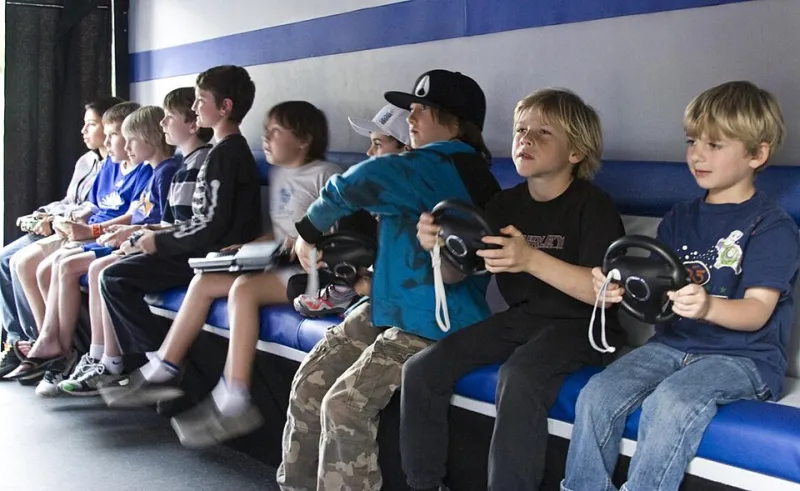
- Play the first few hours together. Not forever — just long enough to understand what your kid is actually doing, and to spot the moments where they might need a hand (or a rule).
Screen Time Without the Standoff
The classic battle goes like this: kid wants to play, parent sets a timer, everyone loses. Hytale offers a rare off-ramp because it's genuinely co-op friendly.
A few approaches that tend to work better than timers:
- Make it a weekend expedition. One longer shared session beats five nightly fights over fifteen more minutes.
- Give them a project, not a session. "Build us a base before Sunday" converts endless scrolling-brain into goal-oriented play with a natural stopping point.
- Ask them to teach you. Kids light up when they're the expert. You'll learn what the game really involves — and they'll practice patience, explanation, and leadership without realizing it.
- Connect it to offline stuff. Drawing the creatures, writing their own zone ideas, building a cardboard dungeon. Folklore that comes off the screen sticks longer.
The Turkish Bazaar in Your Living Room
Full disclosure from us at HytaleTurk: we're a little biased toward the game's marketplace-and-caravan energy. Its NPC towns have that old-world bazaar feel — traders, craftsmen, rumors passed around like goods on a stall. For kids, it's a gentle introduction to the idea that worlds contain many cultures, and that strangers in a market can be friends, quest-givers, or occasionally someone to keep an eye on. Not the worst life lesson to pick up from a video game.
The Bottom Line for Parents
Hytale isn't a babysitter, and it's not a villain either. It's a big, imaginative sandbox with real storytelling underneath — the kind of world kids used to find in library books. Your job isn't to keep them away from it; it's to walk into it with them the first few times.
Who knows? You might end up the one whispering a quick word to Kyros before a boss fight. Stranger things have happened in family gaming.