Bazaar Hopping in Another World: Touring Hytale's NPC Villages Like a Market Town Regular
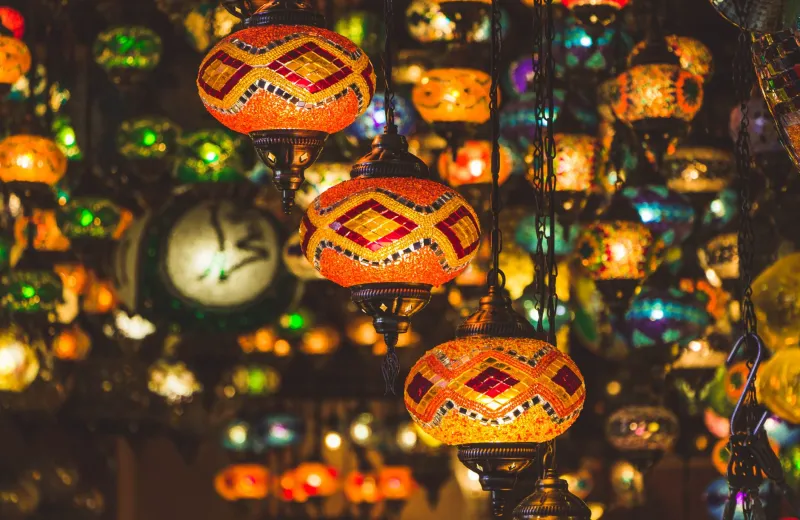
There's a particular rhythm to wandering a Turkish bazaar. You don't march in with a shopping list. You drift. You sample a dried apricot you didn't ask for, haggle over a copper pot you don't need, drink tea someone insists you sit down for, and leave two hours later with a story and a new friend.
That instinct — wander first, optimize later — is exactly the mindset I plan to bring into Hytale's NPC villages. Because everything we've seen from the game so far suggests its settlements won't be vending machines with legs. They'll be living places, with architecture, routines, and economies that reward the kind of player who pokes around instead of speedrunning the trade menu.
Why Villages Matter More Than You Think
A lot of survival games treat NPC settlements as pit stops: swap loot, grab bread, move on. Hytale's pitch has always been different. The team has talked about procedurally generated settlements that vary by zone, with distinct building styles, NPC behaviors, and dangers. A village in a lush forest won't look, feel, or function like one carved into a hostile desert region.
That's not just set dressing. If the NPCs have schedules, threats, and needs, then a village becomes a destination in itself — somewhere you might defend, rebuild, befriend, or (let's be honest) accidentally ruin through your own incompetence. Think less 'loot chest with a roof' and more 'small town with problems you can choose to care about.'
The Village Tourist's Field Notes
Based on what's been shown and discussed publicly, here's how I'm mentally cataloging the settlement archetypes before launch:
The market town. The commercial heart of a region. Expect traders, varied goods, and the kind of central gathering space where you'll learn who sells what. In my head, these are the Grand Bazaars of Hytale — dense, noisy, and easy to get lost in productively.
The frontier outpost. Smaller, scrappier, closer to danger. These are the roadside kebab carts of the world: limited stock, big personality, and a reason they're located exactly where they are. Great for players who want to feel like a lifeline to a struggling community.
The deep-wilds settlement. Villages tucked into hostile territory, where the architecture gets defensive and the locals probably have opinions about monsters. These are the late-game destinations — the equivalent of a mountain village you reach after a long bus ride, where the tea is stronger and the welcome is earned.
Speculating on the Trading Game
Nobody outside the studio knows the final trading mechanics, so take this as informed daydreaming. But if I were designing an economy for a game this focused on emergent play, I'd want:
- Local supply and demand. Goods that are cheap in one biome and precious in another, so hauling trade routes becomes a real player-driven activity.
- Reputation that compounds. Help a village survive a raid, and you shouldn't just get coins — you should get better prices, quests, maybe a bed that's technically yours.
- Items with provenance. A weapon bought from a desert outpost should feel different from one looted in a swamp, because the story of where you got it is half the value.
Even if only some of that makes it in, the loop is clear: travel, trade, invest, and watch a settlement change because you showed up.
Your Day-One Grand Tour Itinerary
When the servers go live, resist the urge to tunnel straight to bedrock. Instead, run this route:
Stop 1 — The first village you see. Walk the whole thing before you buy anything. Learn the layout. Note who's selling what. This is your baseline.
Stop 2 — A settlement in a different biome. Compare the architecture, the goods, the vibe. The differences are where the game's design philosophy will show.
Stop 3 — The most dangerous-adjacent town you can safely reach. Frontier settlements will teach you the stakes faster than any tutorial.
Stop 4 — Pick one village and commit. One in-game week of trading, quests, and small favors. See what changes. That's where the real game hides.
The Long Game
The best market towns I've ever visited weren't memorable because of the prices. They were memorable because someone remembered my face the second time I came through. If Hytale's villages can capture even a fraction of that — a world where showing up, paying attention, and coming back matters — then the economy won't just be a system. It'll be a reason to travel.
Pack light. Barter often. And when an NPC offers you something you can't identify, take it. Worst case, it's a story.
What kind of village are you settling near first? Let us know in the comments — and if you're planning a trade route across zones, we want to hear the route.