Why Hytale Feels Different — And It's Not an Accident
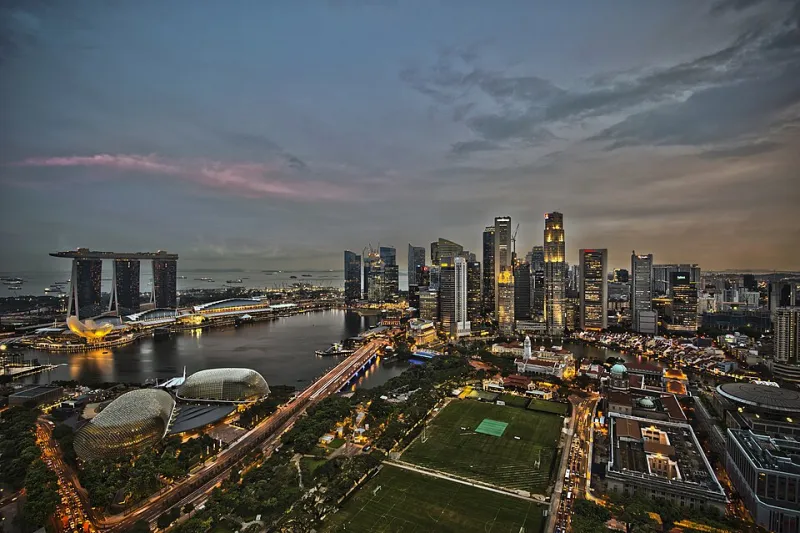
Photo: chenisyuan, CC BY-SA 4.0, via Wikimedia Commons
If you've spent any time digging into Hytale's development, you've probably noticed something that's hard to put into words at first. The game feels different from the usual Western sandbox fare. Not worse, not better necessarily — just different in a way that's a little hard to pin down if you've grown up on a steady diet of American and European game design.
That feeling has a source. Hytale is being developed by Hypixel Studios, a team headquartered in Singapore. And while the studio is internationally staffed and clearly fluent in the language of Western gaming, the cultural and philosophical environment in which the game is being built leaves fingerprints all over the final product. Here at HytaleTurk, sitting at our own intersection of Eastern and Western gaming culture, this is something we find genuinely fascinating — and something we think more Western players should be paying attention to.
The Singapore Factor: More Than a Mailing Address
Let's be clear about something: saying a game has "Eastern" influences isn't a vague compliment or a marketing buzzword. It points to specific design traditions, player expectations, and cultural values that shape how games are built and why.
Singapore is a genuinely unique place to build a game. It sits at a crossroads of Chinese, Malay, Indian, and Western cultural influences, and its gaming community reflects that mix — players there grow up consuming Japanese JRPGs, Korean MMOs, American sandbox games, and everything in between. That exposure produces developers with an unusually broad frame of reference for what games can be.
The result, in Hytale's case, is a game that doesn't feel like it came from a single design tradition. It pulls from multiple wells, and that's not a weakness — it's one of the most interesting things about it.
Community First, Always
One of the clearest Eastern game design influences in Hytale is the emphasis on community as a core pillar of the experience — not an afterthought. Many of the most beloved games out of East Asia, from MapleStory to Ragnarok Online to more recent titles like Lost Ark, treat community infrastructure as a first-class feature. Guilds, shared spaces, cooperative progression, social economies — these aren't bolted on after launch. They're baked into the architecture from day one.
Hytale reflects this thinking. The game's server systems, its approach to world-sharing, and the way its economy is designed to create interdependence between players all suggest a team that fundamentally believes games are better when they're social experiences rather than solo adventures with optional multiplayer.
For American players raised on the "lone hero" narrative that dominates Western RPGs and survival games, this might require a small mindset shift. But it's a shift worth making. Some of the most enduring gaming memories people have come from communities, not campaigns.
Patience as a Design Value
Another thread worth pulling is the long-term orientation baked into Hytale's development itself. Eastern game design — particularly from Korean and Japanese studios — tends to prioritize depth and longevity over immediate gratification. Systems are built to reward sustained engagement. Mastery takes time. The game reveals itself gradually.
Look at how Hypixel Studios has approached the pre-launch period. Rather than rushing to market or overpromising on a timeline, they've taken years to iterate, communicate with the community, and build systems they believe in. That kind of patience is genuinely uncommon in Western game development, where quarterly earnings calls and investor pressure often push studios toward premature launches.
The result is a game that, based on everything we've seen, has been given the space to actually become something before it's handed to players. Whether that pays off is still TBD, but the philosophy itself is refreshing.
Aesthetic Depth and World-Building as Respect
Western sandbox games often lean on procedural generation as a crutch — throw enough random terrain together and players will find their own meaning in it. Hytale takes a different approach. The world is procedurally generated, yes, but it's layered with intentional lore, hand-crafted creature designs, and a mythology that clearly took serious creative investment.
This feels connected to a tradition in Eastern RPGs and MMOs of treating world-building as a form of respect for the player. Games like Final Fantasy, Genshin Impact, and countless others have always operated on the assumption that players want a world with weight and history — that they'll engage more deeply if the world feels like it existed before they arrived.
Hytale's zones, factions, and creature ecosystems all suggest that same assumption is driving design decisions. Orbis isn't just a backdrop. It's meant to feel like a place.
What This Means for Western Players
None of this means Western players need to study up on East Asian gaming culture before they can enjoy Hytale. The game is accessible by design, and its influences are woven in rather than worn on its sleeve. But understanding where some of these design choices come from does change how you receive them.
That slower reveal of systems? That's intentional depth, not a tutorial problem. The emphasis on server communities over solo play? That's a feature, not a missing option. The care put into lore that you'll never be forced to read? That's respect for the players who want it.
For those of us at HytaleTurk who already live at the intersection of these gaming cultures, Hytale feels like a game that was built for us — and we think Western players who give it a real chance will come to feel the same way. The game is different because it was built differently. And different, in this case, is exactly what the sandbox genre needed.