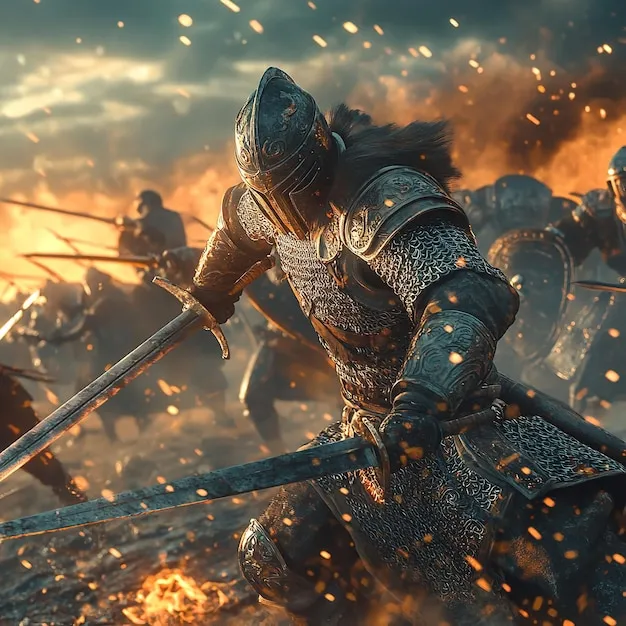
Anyone Can Build: How Hytale Is Handing the Keys to Game Design Over to Players
Photo: Dennis Stachel for GDC Europe, CC BY 2.0, via Wikimedia Commons
There's a moment every gamer has experienced at least once. You're deep in your favorite sandbox world, tweaking something, wishing you could just change one thing — add a new enemy type, reskin a weapon, build an entirely different game mode inside the game you already love. For most of us, that wish hits a wall pretty fast. Programming is hard. Modding tools are cryptic. And the barrier between "player" and "creator" has always felt like a canyon.
Hytale is trying to fill that canyon with a bridge. And honestly? It might actually work.
The Old Guard vs. The New Wave
Let's be real about the competition for a second. Minecraft has mods — lots of them — but getting deep into modding that game traditionally meant wrestling with Java, setting up development environments, and spending more time reading documentation than actually building anything fun. Roblox lowered the floor considerably with Lua scripting, and it birthed an entire generation of young developers. But even Roblox has its ceiling, and the aesthetic and mechanical limitations are well-documented.
Hytale is positioning itself in a different lane entirely. Hypixel Studios has been vocal about building a game where the creation tools aren't an afterthought bolted onto the side — they're central to the whole experience. The modding suite is designed to feel like a natural extension of playing, not a separate discipline you have to go learn before you can participate.
That's a genuinely different philosophy, and it shows in the early community response.
What "Intuitive" Actually Looks Like
When developers say their tools are "intuitive," it's easy to roll your eyes. Marketing speak, right? But what Hytale is building seems to back up the claim in concrete ways.
The game's entity system lets creators define behaviors, animations, and interactions through a visual scripting approach that reduces the need for hard-coded logic. Want an enemy that gets faster when it's damaged? You can set that up without writing a function. Want a custom NPC that gives quests based on time of day? There's a framework for that which doesn't require a computer science degree to navigate.
Early creators who've had access to the tools have described the experience as surprisingly close to "thinking through design problems" rather than "fighting with syntax errors." One community member building a custom dungeon crawler module put it this way in a Discord discussion: "I kept waiting for the moment where I'd have to stop and go learn something technical. It just... didn't come. I was solving design problems the whole time."
That's the dream, isn't it?
Community Mods Already Turning Heads
Even before full launch, the Hytale community has been cooking. Early access creators and testers have produced everything from overhauled biome packs that introduce completely new visual identities to experimental PvP arenas with custom rule sets that feel like standalone competitive games.
One standout project that's been circulating in community forums is a survival horror conversion mod that strips out the adventure RPG elements entirely and replaces them with resource scarcity mechanics and a persistent threat system. The creator — a college student from Ohio with no prior game development experience — built it using Hytale's native tools over the course of a few months. The result looks and plays like something that could legitimately sell on Steam as its own title.
That's not a small thing. That's a person who, in a different era, would have just been a fan. Now they're a developer.
The East-West Creative Exchange
Here at HytaleTurk, we think about this stuff through a particular lens — the intersection of Eastern and Western gaming culture. And the modding scene is actually one of the most interesting places to watch that intersection play out.
Turkish and broader Middle Eastern gaming communities have historically been voracious consumers of games built elsewhere. But the creative tools pipeline — the pathway from player to creator — hasn't always been equally accessible across language and cultural barriers. English-language documentation, US-centric tutorials, and Western-default aesthetics have created subtle friction for creators coming from other backgrounds.
Hytale's approach to creator tools, combined with a genuinely global community, is starting to shift that balance. Creators from Istanbul, Ankara, and across the Turkish diaspora in cities like New York and Chicago are already building mods that pull from Ottoman architecture, Turkish folklore, and regional mythology. That content isn't just culturally significant — it's enriching the whole ecosystem for every player worldwide.
Game design democratization isn't just about lowering technical barriers. It's about making sure the creative table has seats for everyone.
Is This the Indie Dev Pipeline of the Future?
Here's the bigger picture question worth sitting with: Is Hytale quietly building the most effective game development school in the world?
Roblox already has a documented track record of producing developers who moved from the platform into professional game development. Unity and Unreal Engine have their own pipelines. But Hytale is potentially doing something different — creating a space where the design sensibility develops first, and the technical skills can follow naturally from there.
When you spend hundreds of hours thinking about enemy behavior, level pacing, reward loops, and player experience inside Hytale's creator suite, you're building a mental model of game design that transfers. You're not just learning the tools — you're learning to think like a designer.
For a kid in Texas or Tennessee (or Trabzon, for that matter) who dreams of making games but doesn't have access to expensive bootcamps or a computer science program, that's legitimately life-changing.
The Verdict
Hytale's creator tools aren't perfect — no pre-launch system ever is — and there will be growing pains as the full community gets its hands on them. Some features will need iteration. Documentation will need expansion. The learning curve for more complex projects will still require effort.
But the core philosophy is sound, and the early evidence suggests it's working. When ordinary players start building things that look like commercial indie games on their first attempt, something real is happening.
The wall between player and creator is coming down. And honestly, it's about time.