Arches, Courtyards, and Domed Roofs: Building an Anatolian-Style Guild Hall in Hytale
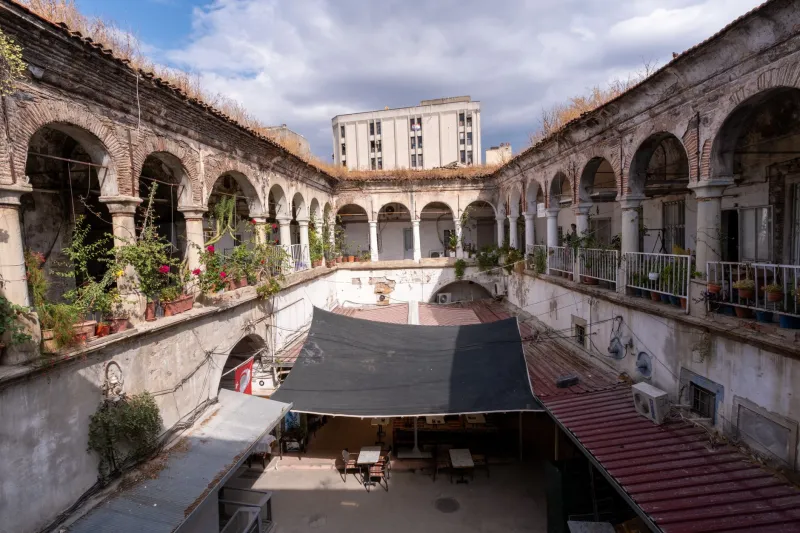
Every guild needs a home base. Most players will build the same thing: a big rectangular hall, some banners, maybe a tower if they're feeling ambitious. Functional? Sure. Memorable? Not even a little.
If you want your guild hall to be the one people screenshot when they visit your server, consider borrowing from one of history's great building traditions: Anatolian architecture. We're talking Seljuk stonework, Ottoman courtyards, and the caravanserais that once dotted the trade routes between Constantinople and the Silk Road. These structures were literally designed as gathering places for travelers — which makes them the perfect blueprint for a Hytale guild hall.
Why the Caravanserai Is the Perfect Guild Hall
A caravanserai was a fortified rest stop for merchant caravans. Picture a massive square building with thick stone walls, a single grand entrance gate, and an open courtyard in the center where travelers could stable their animals, trade goods, and sleep safely for the night.
Now compare that to what a guild actually does in Hytale: a group of adventurers who come back from expeditions to store loot, craft gear, plan raids, and hang out. It's the same job description, separated by a millennium.
The layout practically builds itself:
- The courtyard — your central gathering space, open to the sky
- Covered arcades along the courtyard edges — crafting stations, market stalls, storage
- A grand arched gateway — the only way in, and your signature visual
- Corner towers or a small dome — watchposts and a claimable "boss room" for guild leadership
Nailing the Silhouette First
Before you place a single block, think about shape. Anatolian skylines read differently than the European castle look most players default to. Instead of tall spires and sharp rooflines, you're aiming for:
- Low, broad walls with a strong horizontal emphasis
- Domes and shallow vaults instead of pitched roofs
- Rounded arches everywhere — doorways, windows, gateways
- Buttress-heavy outer walls that look built to withstand a siege
In Hytale's blocky engine, domes are easier than they sound. Build a circular drum (a cylinder of walls), then layer rings of blocks that step inward as you climb, shrinking the radius until you can cap it. A shallow dome — two or three rings — reads as Ottoman without requiring a math degree.
Your Block Palette
Hytale's building system gives you tons of material flexibility, so here's a palette that captures the Anatolian look while staying cohesive with the game's art style:
- Sandstone and limestone tones for the main walls — think warm beige and honey tones rather than gray cobblestone
- Darker stone trim for corner buttresses, arch edges, and string courses to break up large wall faces
- Wood accents (warm, medium-brown tones) for the courtyard arcades, ceiling beams, and shutters
- Terracotta or patterned tile blocks for courtyard flooring — try a geometric star pattern if the game's block set allows it; a simple checkerboard works too
- Lantern-style light sources instead of torches wherever possible — warm, enclosed lighting sells the vibe
The key move is contrast through trim, not through wild color changes. Seljuk builders used stone geometry — zigzag bands, star patterns, calligraphy panels — rather than paint. In Hytale terms, that means using one or two accent blocks to create horizontal bands and framed arches across otherwise plain walls.
The Grand Gateway: Your Money Shot
Every caravanserai announced itself with an entrance gate (a taş kapı) that was more decorative than defensive — an enormous arched portal covered in carved geometric ornament.
Build yours at least five blocks wide and seven tall, with a pointed or slightly rounded arch. Frame it with contrasting trim blocks, add a band of decorative patterning above the arch, and flank it with two slender towers. Hang your guild banner above it and you've got a landmark players can spot from across the zone.
Pro tip: leave the gate unlit from outside and warm-lit from within. That glow spilling through the arch at night is the single best screenshot your guild will ever take.
Courtyard Details That Sell It
The difference between a good build and a great one is the small stuff. In your central courtyard, add:
- A central fountain or small pool — courtyards in Anatolian homes and mosques almost always centered on water
- Potted plants and small trees in terracotta-style planters
- Stall-style counters under the arcades for a trade-day market feel
- Rugs or patterned floor sections in interior rooms to mark gathering spots
And don't build the courtyard as a perfect empty square. Nudge the arcade depths, vary the roofline, add a staircase to a rooftop terrace. Ottoman architecture is geometric, but it's never sterile.
Blending It with Hytale's Style
Here's the trick most build guides skip: Hytale has its own whimsical, slightly chunky art direction, and a hyper-realistic recreation can clash with the world around it. Lean into the game's proportions — chunky arches, exaggerated trim, slightly oversized lanterns — so your caravanserai feels like it grew out of Hytale's zones rather than pasted onto them.
It also plays beautifully with Hytale's biomes. A sandstone palette pops in arid and Mediterranean-style zones, while a timber-and-stone hybrid version works great near forested areas — imagine a Kweebec Woods caravanserai with living trees growing through the courtyard.
So round up your guild, claim a plot, and start laying out that courtyard. A thousand years ago, the caravanserai was where adventurers met. In Hytale, it can be again — and yours will be the build everyone remembers.