Tea Glasses, Trabant Doors, and Tiled Roofs: The Real-World Inspirations Hiding in Hytale's Design
Every game borrows. The good ones borrow with intention.
After years of watching Hytale trailers frame by frame, reading developer posts, and — full disclosure — squinting at screenshots like a detective at a corkboard, I've come to a conclusion: Hytale's world design isn't just generic fantasy. There's a travelogue hiding in it. And for those of us who've spent time bouncing between Istanbul's Grand Bazaar and a cousin's Lada in rural Hungary, the fingerprints are everywhere.
Here are seven design choices that feel pulled straight from real-world culture — whether the devs admit it or not.
1. The Bazaar Economy: Haggling as a Gameplay Loop
Hytale's NPC trading feels less like a Skyrim menu and more like an actual market. Vendors have personalities, stock shifts, and — critically — the whole thing is designed around relationship-building rather than raw currency.
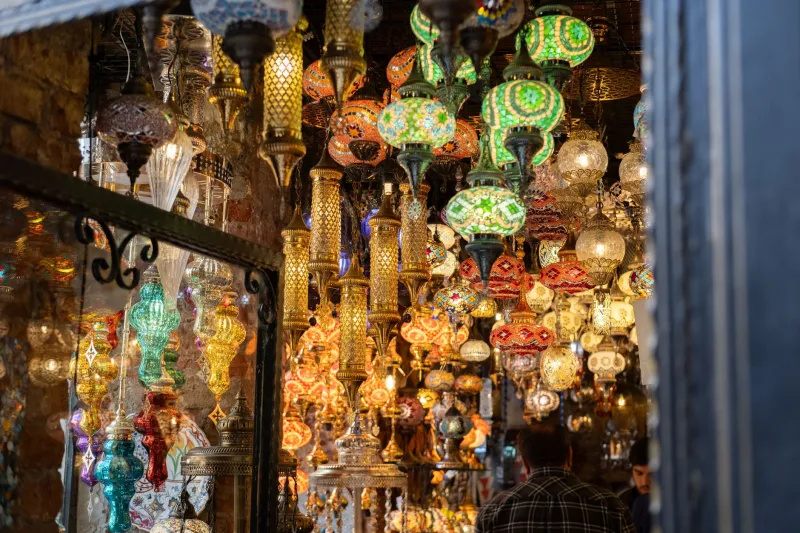
Sound familiar? That's the Anatolian bazaar model. In Turkey's grand covered markets, you don't buy a carpet; you sit down, you drink tea, you talk. The transaction is the relationship. If Hytale's economy rewards repeat visits and vendor familiarity over pure gold accumulation, that's not a Western RPG convention — that's a bazaar, digitized.
For US players raised on Amazon-style instant transactions, this is the design equivalent of a farmers market versus a Walmart self-checkout.
2. The Tea Glass: Small UI Details with Big Personality
Look closely at Hytale's tavern and village interiors in released footage. The drinkware, the seating arrangements, the way NPCs gather — it reads less like a medieval English pub and more like a çay bahçesi, a Turkish tea garden, where the whole community shares one space and one ritual.
Why does this matter for gameplay? Because social hubs designed around lingering (rather than grab-your-quest-and-go) create the organic multiplayer encounters that make MMO-adjacent games feel alive. It's the difference between a truck stop and a town square.
3. Eastern European Communal Building: The Zone-Claim System
Hytale's approach to shared building and zone ownership echoes something Americans don't always have a reference point for: the communal courtyard traditions of Eastern Bloc housing. In cities across Poland, Hungary, and the Balkans, apartment blocks were built around shared interior courtyards — semi-private spaces collectively maintained by everyone who lived there.
Translate that into Hytale's multiplayer building systems and you get something smarter than a free-for-all: structures that belong to a group, with shared responsibility baked into the layout. That's not just a mechanic; that's post-war urban planning repurposed as game design.
4. Domed Roofs and Anatolian Architecture in World Design
The desert and temperate zones in Hytale's concept art lean hard into arches, domed rooftops, and courtyard-centered homes — the visual language of Seljuk and Ottoman architecture. This isn't the standard Tolkien-meets-Minecraft aesthetic. It's a region of the world that blocky sandbox games have historically ignored.
The gameplay payoff: architectural styles aren't just cosmetic. Domed structures and thick-walled courtyard buildings imply different defensive and environmental logic than a wooden Nordic longhouse. If Hytale follows through, region-appropriate architecture becomes a survival strategy, not a screenshot.
5. The Trabant Principle: Making Do with Less
Here's a weird one. The East German Trabant — that famously underpowered, durably scrappy little car — was a masterclass in designing for scarcity. It wasn't pretty, but it worked, and people formed genuine emotional attachments to it.
Hytale's early-game crafting philosophy seems cut from the same cloth. Rather than front-loading players with power, the game emphasizes modest, repairable, upgradeable tools — the gameplay equivalent of keeping a Trabi running with duct tape and stubbornness. Scarcity breeds attachment, and attachment breeds the stories players tell for years.
6. Caravanserais: Waypoints Built for Travelers
Scattered across Hytale's world map are what look like rest points and traveler outposts. The historical blueprint here is the caravanserai — the roadside inns that dotted Silk Road routes roughly every day's journey, offering shelter, trade, and safety.
Design-wise, this solves one of sandbox gaming's oldest problems: long-distance travel is either tedious or trivial. Caravanserai-style waypoints create natural rhythm — journey, rest, resupply, journey — which is exactly how pre-modern travel actually worked. It's worldbuilding and pacing in one structure.
7. The Mevlevi Rotation: Combat as Choreography
Watch Hytale's combat footage and notice the emphasis on movement, positioning, and flowing sequences rather than static tank-and-spank encounters. The closest real-world analog isn't fencing or boxing — it's the whirling choreography of the Mevlevi sema ceremony, where rotation and controlled motion carry the meaning.
Okay, I'm being a little poetic here. But the underlying point stands: Hytale's combat reads as dance rather than brawler, rewarding rhythm and spatial awareness. For US players raised on Dark Souls' punishing stillness, that's a genuinely different muscle group.
Why This Matters for American Players
None of this is to say Hytale is secretly a Turkish game. It's to say the best worldbuilders steal from everywhere — and the influences above come from cultures that mainstream US gaming rarely draws from.
That's the quiet promise of Hytale: a fantasy world that feels less like a theme-park reproduction of medieval Europe and more like an actual crossroads of civilizations. For a game built around exploration, that's not a design flourish. That's the whole point.
So next time you load in, skip the tutorial for five minutes. Look at the tea glasses. Look at the rooftops. The world's got stories baked into its walls — you just have to know where your eyes should wander.